UHP Cleaning & Concrete Removal
Ultra-high-pressure water on an accurately steerable nozzle, adjustable from 10,000 to 40,000 psi at the touch of a button while the cut runs. Concrete, grout, calcium, tuberculation, failed liner, protruding taps and roots removed without a mechanical blade touching the host pipe.
A mechanical cutter cannot tell the difference between the obstruction and your pipe.
Conventional robotic cutters use a spinning carbide or chain head. It removes the obstruction — and it will also gouge a host pipe, score a new liner, or take a bite out of a joint if the operator's judgment or the tool's geometry is even slightly off. On a rehabilitated line, that is an expensive mistake.
Ultra-high-pressure water cutting removes material by pressure and nozzle placement instead. Digital controls adjust pressure continuously and the pump responds immediately, so the operator dials in exactly the energy the material needs — hard on concrete, gentle approaching a liner edge — while watching the cut on the integrated CCTV module. The platform we run is built on twenty years of UHP water jet cutting development.
The practical result is controlled removal of solid obstructions with the host pipe intact, in situations where a blade would have meant an open cut.
This is the argument for a main. Inside an occupied building the calculation reverses — high-pressure water in a closed system of traps and fixtures can do more damage than the blockage, so there we clean mechanically with cable machines instead. How we decide →
What the cutting robots remove
- Concrete, cement and grout intrusion
- Calcium and calcite deposits
- Tuberculation and mineral scale
- Failed, wrinkled or collapsed CIPP liner
- Hardened grease and wax
- Protruding taps and lateral connections
- Root intrusion, including fine root at the joint
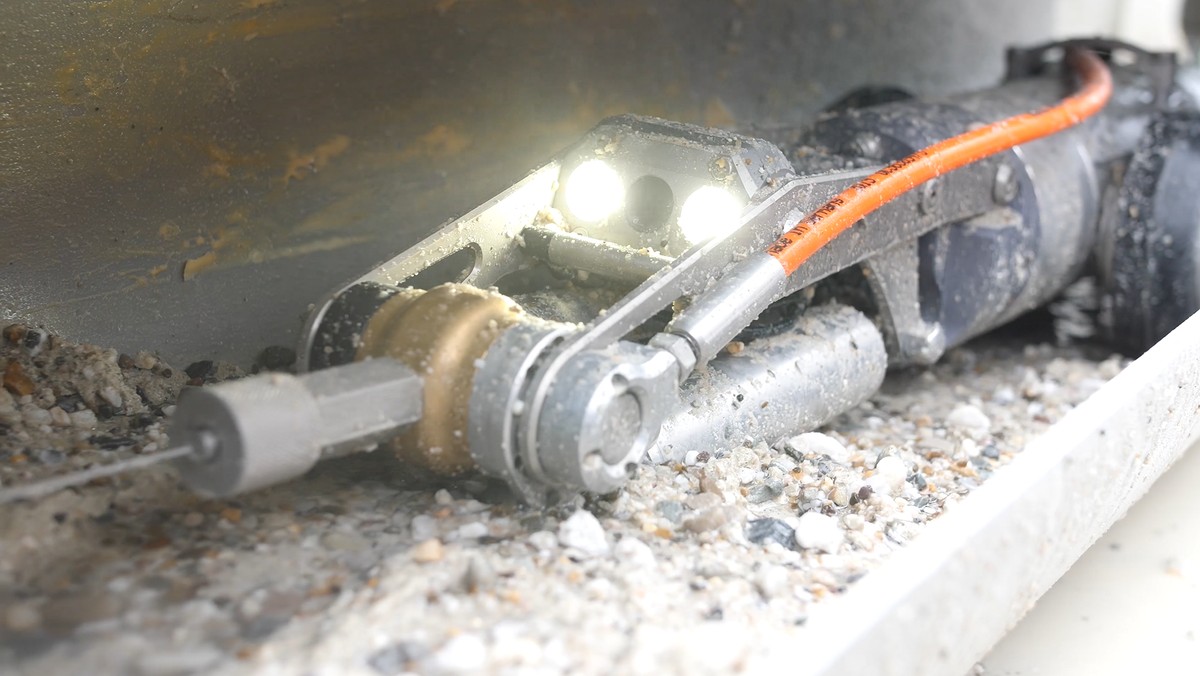
Photography of this platform supplied by the equipment manufacturer and used with permission. TPR-Group is a certified user and runs this platform on our own projects.
Purpose-built UHP cutting robots
Our configured cutting envelope runs 8" to 48", covering the range most municipal, industrial and base collection systems sit in, with larger-diameter configurations available for trunk mains and industrial process lines. Crawlers are rated well above the pressures we run, so 40,000 psi is a working figure rather than a limit.
Adjustable 10,000 – 40,000 psi
High-pressure, low-volume water blast from a purpose-built crawler. Control software gives full pressure adjustment at the touch of a button, with immediate pump response, so the tool adapts the instant the material changes mid-cut.
Accurately steerable nozzle
The nozzle is aimed, not just spun. That is what makes a clean lateral reinstatement and a flush tap removal possible without touching the surrounding pipe wall.
CCTV module on the head
Continuous visual supervision throughout. The cut is inspected as it is made and the finished condition is documented before the robot comes out.
Pressure is a dial, not a setting.
Our pumps run anywhere from 10,000 to 40,000 psi, and the control software puts that whole range under the operator's thumb — adjusted at the touch of a button, mid-cut, without pulling the robot. If 10,000 psi does the job, that is what the pipe sees. The moment the material changes, so does the pressure.
Roots, grease and soft deposit — and lateral reinstatement through CIPP liner, PVC, vitrified clay and brick. Work that needs placement, not power.
Cement, corrosion, scale, grout and calcium. The band most hard-deposit removal actually sits in, including tuberculation in cast and ductile iron.
Hard calcium and concrete that did not move at twenty. Where the deposit has effectively become part of the pipe.
The hardest concrete and calcium there is. The obstruction that stopped a jet truck and broke a cutter head.
One mobilization, every material
A fixed-pressure unit means choosing the tool before you know what is in the pipe. Ours arrives able to handle all of it, so a surprise mid-run is an adjustment rather than a second mobilization next week.
The host pipe survives
Most damage in robotic cutting comes from applying more energy than the material needed. Dialling down the instant the concrete gives way to liner is the difference between a reinstatement and a repair.
The operator is watching
Pressure control and the CCTV module sit in the same hands. The person changing the setting is the person looking at the cut — not reading a gauge at a pump two hundred feet away.
The counter-intuitive part is how much of this work sits at the bottom of the range. Roots, grease and lateral reinstatement through a new liner are low-pressure jobs — reaching for forty thousand psi on one of those is how a liner gets scored. Knowing which band a material belongs in, and dropping to it the moment the material changes, is the whole skill.
The traction platform — 40,000 psi in large diameter
Where the asset is large-diameter, non-circular or long-run, we pair a multi-function traction robot with a matched ultra-high-pressure pump unit delivering 40,600 psi at 25 l/min.
The traction unit pulls its own hose, so cutting energy does not fall away with distance the way it does on a hose pushed from a manhole. Combined with 4,900+ ft of reach and the ability to run square, rectangular, S-shaped and vertical structures, it covers the heavy industrial and trunk-main work the compact crawlers are not built for — to 54" with extension arms.
Traction robot + matched UHP pump
A traction robot that cuts, and then does five other things.
Alongside the dedicated cutting robots we run a self-propelled traction platform built for large-diameter mains and industrial process pipe. It braces itself against the pipe wall on six or eight powered tracks, carries front and rear cameras, and takes the same ultra-high-pressure water the cutting robots use — 8" to 54" with extension arms, over 4,900 ft in a single deployment.
What makes it worth a separate mobilization line is everything else on the chassis. The same robot abrasive-cleans, dry-ice cleans, laser-profiles, measures remaining wall thickness and applies protective epoxy coating. A municipal main gets cut and cleaned; an industrial process line gets cleaned, gauged and coated without a second contractor and without the asset coming out of the ground.
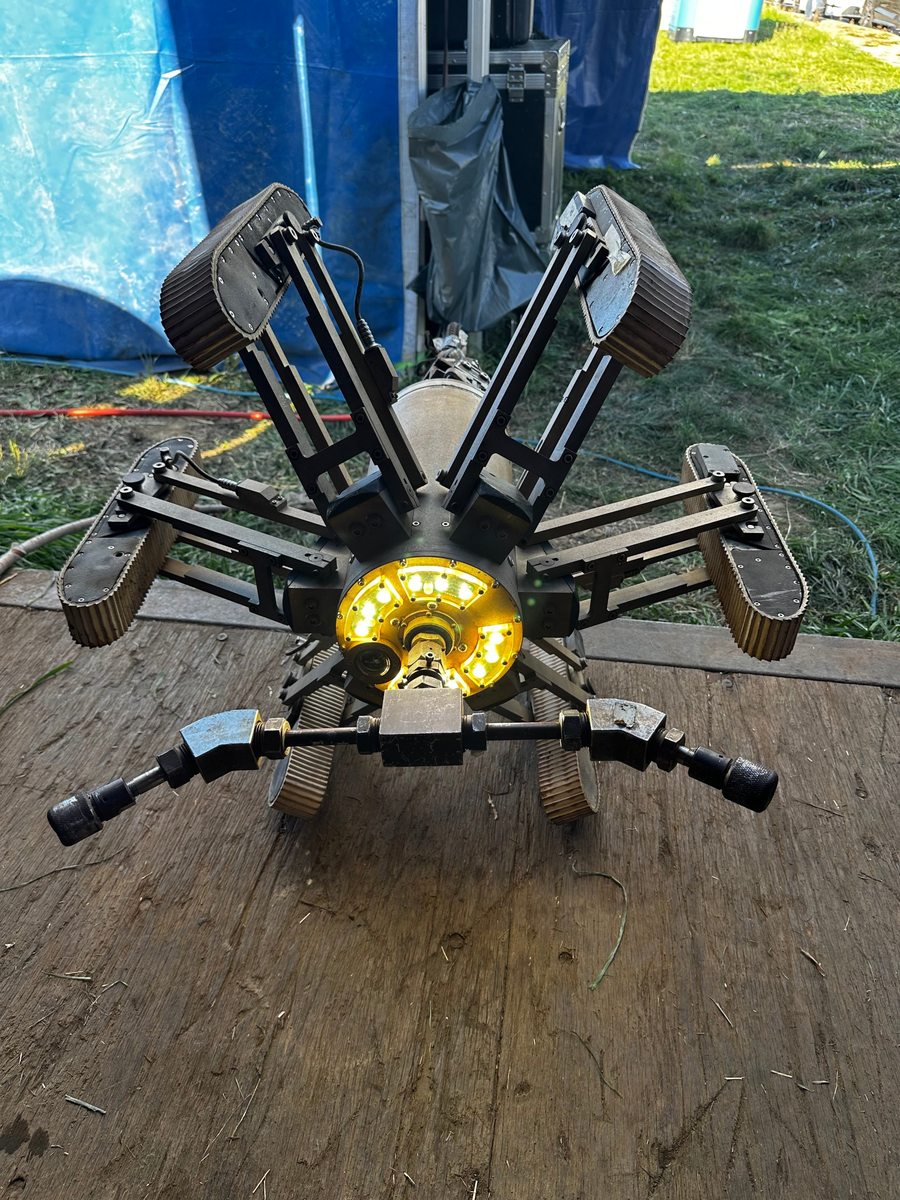
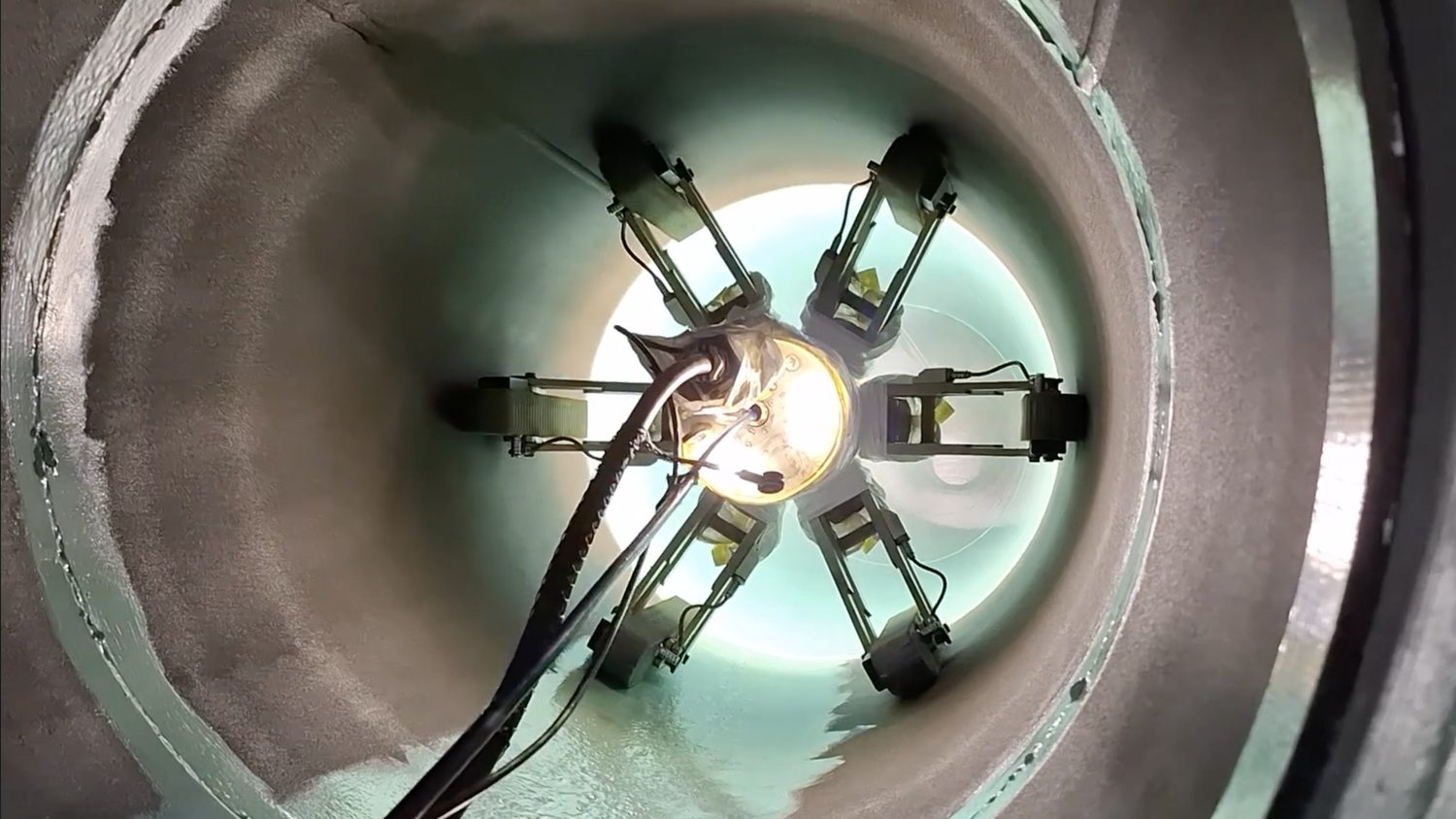
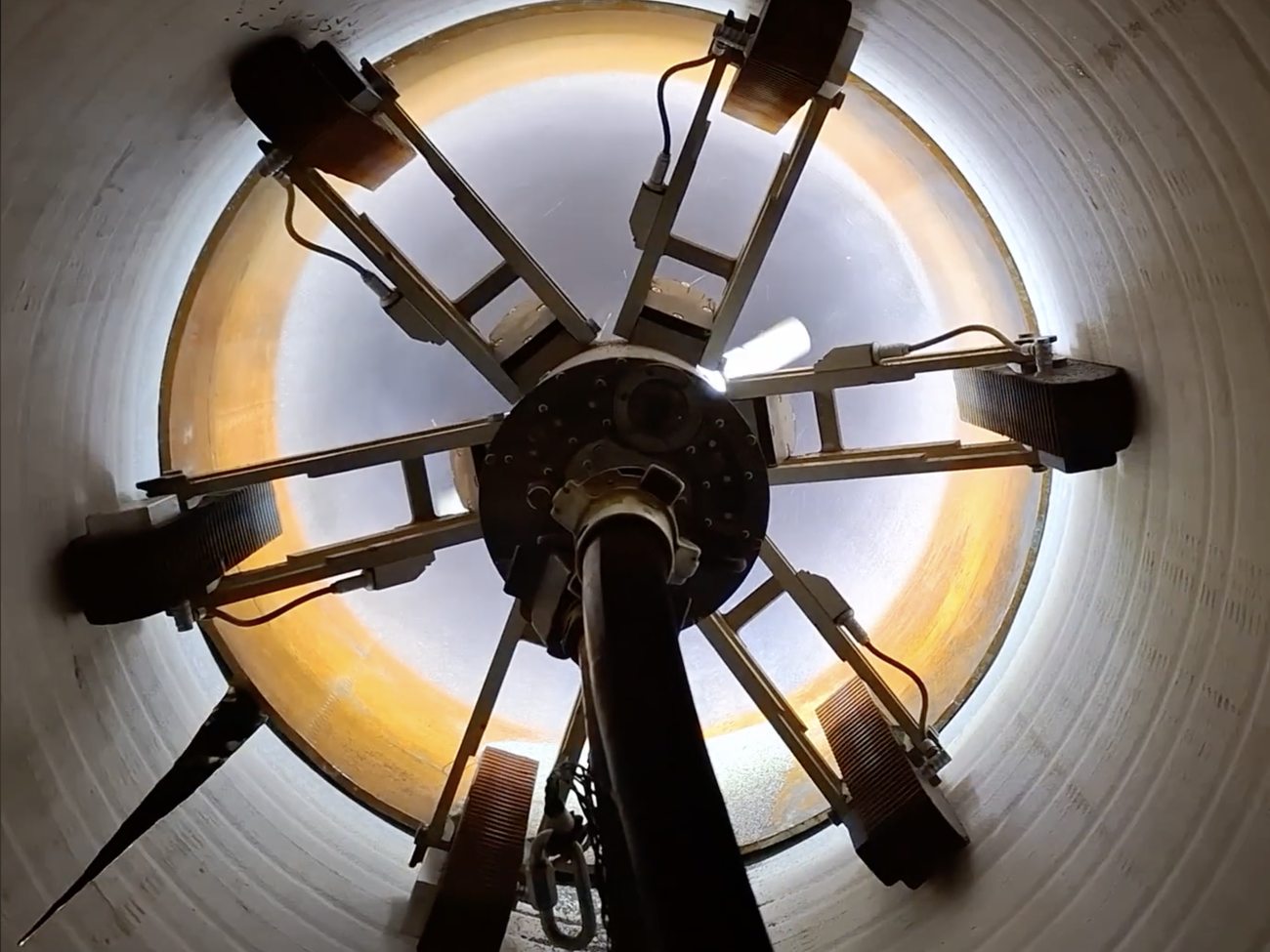
Photography of this platform supplied by the equipment manufacturer and used with permission. TPR-Group is a certified user and runs it on our own projects.
Forty thousand psi is not something you hand to an untrained operator.
Ultra-high-pressure water at these levels is an injection hazard. A stream you cannot see the force of will go through a boot, a glove and the tissue underneath without the operator registering a cut — and the injury that follows is a surgical emergency, not a first-aid report. That is the reason this work stays with people who have been trained for it and the reason we will not put an untrained hand on a lance.
Every TPR-Group technician is certified and safety-trained on every platform they operate. Training is platform-specific and documented, and it is heaviest exactly where the hazard is: ultra-high-pressure pump systems and robotic equipment.
What our crews carry onto your site
- UHP operator certification — injection injury, pressure isolation, hose and lance handling, exclusion zones, emergency response
- Equipment-specific certification on every crawler, camera and traction system before independent deployment
- Confined-space awareness and rescue planning, even though our method keeps personnel out of the pipe
- Site and traffic safety, lockout/tagout and PPE protocols for military, industrial and occupied-building environments
- Training records and certification currency available for prequalification review
Where precision cutting earns its cost
Lateral reinstatement after lining
Reopening service connections through a new CIPP liner cleanly and to the full original opening, without scoring or delaminating the liner you just paid for.
Protruding taps
Hammer-tapped connections cut flush to the host pipe wall — the single most common cause of downstream blockage and failed CCTV runs in older systems.
Failed liner removal
Collapsed, wrinkled or blistered liner sectioned out and removed so the line can be re-lined rather than excavated.
Concrete and grout
Construction spoil, grout migration from a neighbouring repair, and hardened deposit removed under continuous visual supervision.
Calcium, calcite and tuberculation
Mineral scale and corrosion nodules removed with pressure tuned to the deposit rather than mechanical force applied to the whole bore — restoring bore diameter in cast and ductile iron without taking the wall with it.
Emergency blockage removal
The obstruction that stopped a jet truck and broke a cutter head. We mobilise, see it, and cut it — no excavation, no bypass pumping while a design is drawn up.
Military and secured sites
No excavation, no open cut, no long-duration lane closure inside the perimeter — the work happens through existing access points.
What it actually looks like from the cutting head.
Footage from the camera module that rides on the nozzle. No narration, no edit — just the material coming off under a jet the operator is aiming while watching this exact view.
Footage supplied by the equipment manufacturer. TPR-Group is a certified user of these platforms and runs them on our own projects.
Barnacle and mussel shell in intake and jetty lines.
Seawater intakes, jetty lines and raw-water mains foul from the inside until the bore closes down. The shell layer is hard, it is bonded to the wall, and a mechanical cutter takes the host pipe with it. Ultra-high-pressure water strips it at the wall and leaves the pipe intact — and the line is worked from the inside, with no dewatering of the surrounding system.
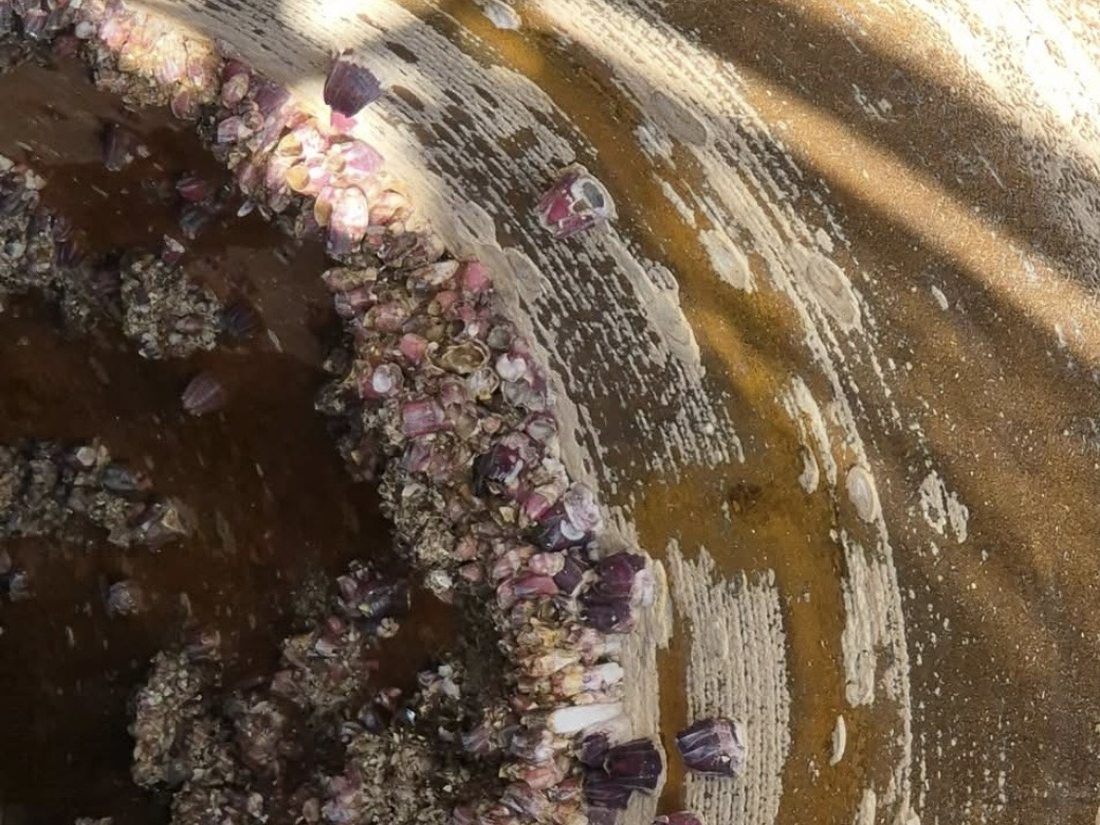
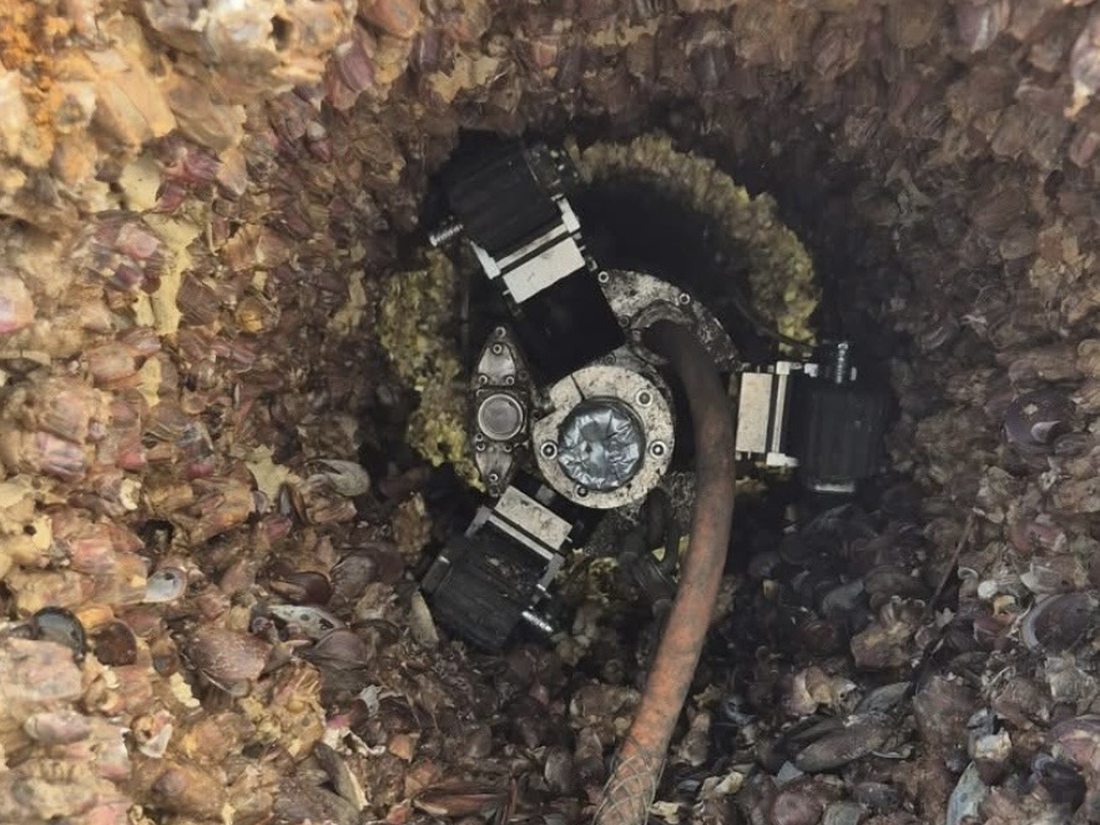
Footage and photography supplied by the equipment manufacturer and used with permission. TPR-Group is a certified user of these platforms. This section shows what the equipment does; our own project photography is credited as such wherever it appears.
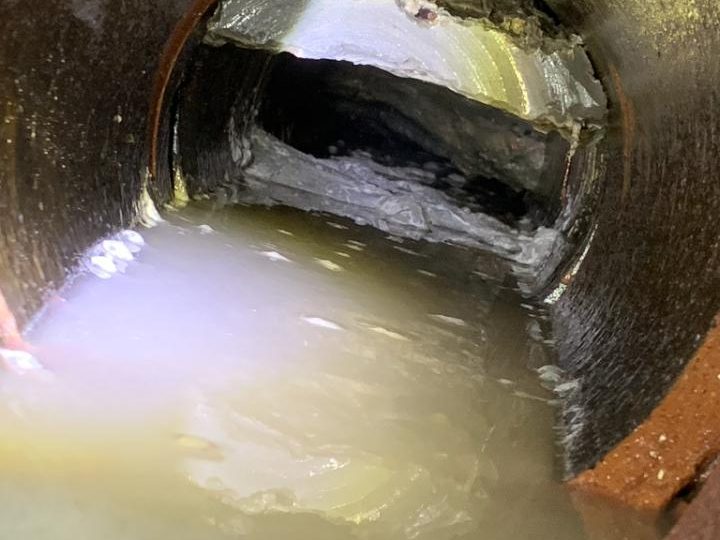
The camera and the cutter arrive together.
Most obstruction work is bid twice — once to find out what is in the pipe, and again to remove it. Our cutting platforms carry the CCTV module on the same chassis as the nozzle, so the inspection that identifies the obstruction and the cut that removes it happen in the same deployment, with the operator watching the deposit come off in real time.
It also means the cut stops when the pipe is clean, not when the clock says so. The operator can see the host pipe wall, the liner and the connection throughout, and pressure comes down the moment the deposit is gone.
It goes in on tracks, tethered and watched.
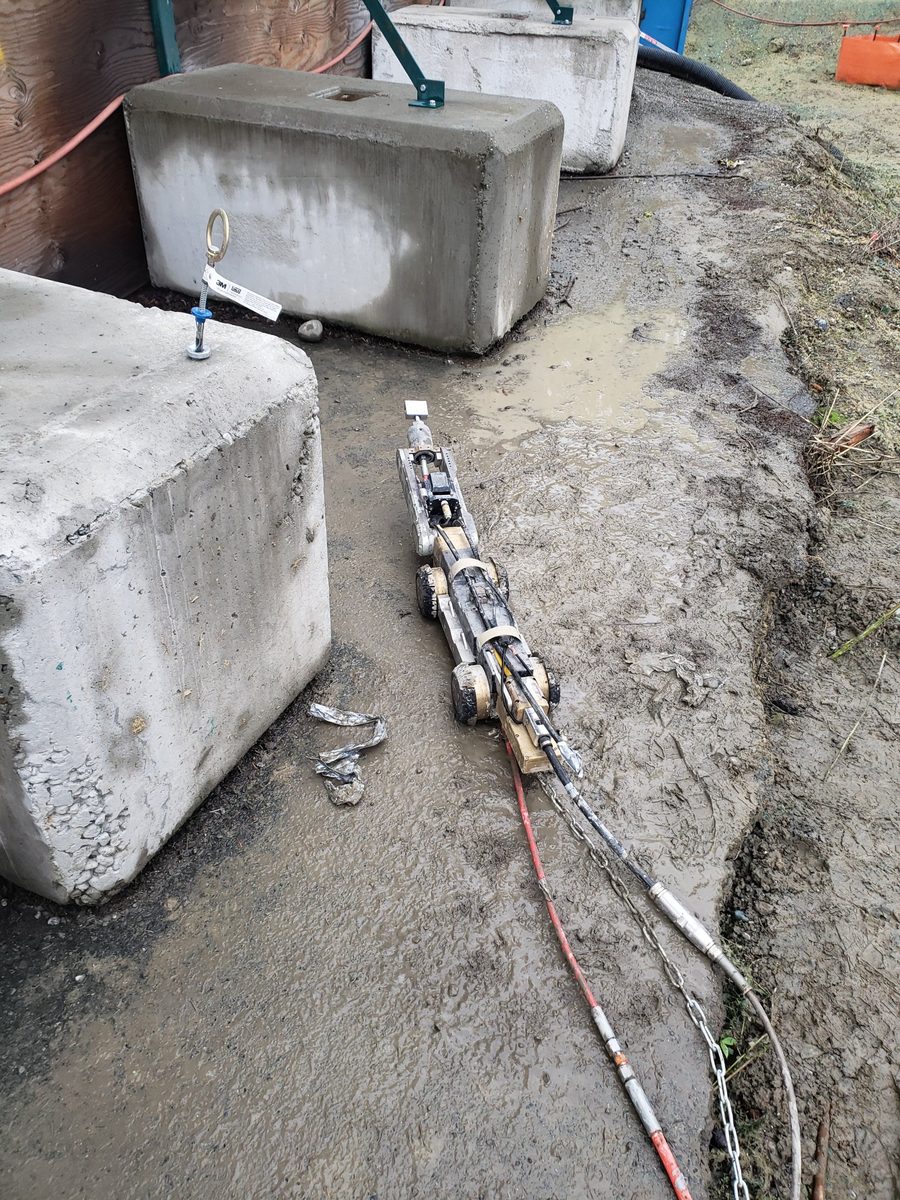
The cutting platform tracks in under its own power on a jetting hose, a data tether and a recovery line. Nothing about the deployment requires a person in the pipe, and nothing about it requires the street above to come up.
Pressure is set at the console and adjusted on the fly — low for roots, grease and reinstatement through a liner, stepped up for grout, scale and calcium, and taken to the top of the range only where set concrete demands it. The operator watches the host pipe wall throughout and backs the pressure off the moment the deposit is gone.
Every technician on a UHP deployment is certified and safety-trained on the pump and the platform. At these pressures that is not a formality.
Send us the obstruction.
A still frame or 30 seconds of video from a previous inspection is usually enough for us to tell you whether UHP cutting will clear it and what it takes.