
AI Coding — PACP, LACP, MACP & BSDI
AI-assisted defect identification, verified by a NASSCO-certified coder on every observation. All four assessment programs, coded from the main and from the building, delivered in a form your asset system can actually ingest.
Video is evidence. Coded data is an asset.
A hard drive of MP4 files does not prioritize a capital program. NASSCO's assessment programs exist so that condition information is recorded the same way by every crew, in every city, in a form a database can actually use. Our on-site operators are certified across all four — PACP for mains, MACP for manholes, LACP for laterals worked from the main, and BSDI for building sewers and drains worked from the building — and hold current NASSCO PipePros professional standing. Alongside the four assessment programs we hold DCCP, NASSCO’s Drain Cleaning Certification Program — a documented method for cleaning laterals without damaging the host pipe. It is not an assessment program; it certifies the cleaning rather than the coding.
The practical consequence: what we hand you imports into your asset management or GIS platform and survives a review by your engineer of record. Certifications carry a three-year term and we keep ours current, so the coding version on your project is the one you contracted for.
If you would rather code it yourself, you can. The choice is yours per job — watch the run live, code the capture in-house, or hand it to us.
What ships with every inspection
- NASSCO-coded condition database
- Full-resolution video, indexed to footage and defect
- Still captures at every coded observation
- Manhole reports with component-level condition
- BSDI building sewer & drain reports for private-side assets
- GIS-ready export for your asset system
- Prioritized findings summary for capital planning
The AI finds it. A certified coder confirms it.
Our mainline camera platform uses AI to streamline defect identification and reporting, which takes the slowest, most error-prone part of an assessment — one person scrubbing hours of footage looking for things — and turns it into review rather than search. Every observation that reaches your report has still been confirmed by a NASSCO-certified coder. That is the part we will not automate.
Capture
4K video with inch-level odometry positioning, streaming live over built-in LTE/5G. The data starts uploading from the site rather than riding back on a hard drive, which is where most of the time saving against a conventional CCTV truck actually comes from.
AI-assisted identification
AI passes over the footage and surfaces candidate defects with their location, so the coder's time goes to judgment calls instead of hunting. 360° pan-tilt-zoom in post-review means a questionable observation is re-examined from any angle without going back to the site.
Certified, verified coding
A NASSCO-certified coder reviews, corrects and signs off every observation before it becomes PACP, MACP, LACP or BSDI data. Or take the raw capture and code it in-house — that choice is yours, per job.
Why it matters on a program: consistency. AI applies the same threshold to segment one and segment nine hundred, which is precisely where fatigue puts drift into a hand-coded dataset — and drift is what makes a multi-year condition trend unusable.
BSDI — the certification that covers the half of the pipe everyone else skips
NASSCO's Building Sewer and Drain Inspection standard applies to building sewers and drains, including laterals, inspected the way they are actually reached in the field: starting at or inside the building and running down toward the main. LACP works the same pipe from the opposite end. We hold both.
BSDI vs LACP — same lateral, opposite ends
An LACP inspection launches from the main and travels toward the building. A BSDI inspection starts at the cleanout, the stack or inside the structure and travels toward the main. On a long or obstructed service line, neither one alone reaches the whole run — which is how a defect ends up in nobody's report and nobody's budget.
Because we are certified in both, we can enter from whichever end actually gets there and still hand you a standards-coded record.
Our building platforms needed it
Our clean-and-inspect platform works vertical stacks in occupied high-rises. Our 3D-mapping push camera maps building service lines where no as-built survives. Both work from the building side — exactly the assets BSDI was written for.
- Commercial and high-rise stacks, risers and branch lines
- Private-side laterals in I&I and point-of-sale programs
- Campus, base housing and facility building drains
- Pre-purchase and pre-renovation condition records
BSDI certification is issued by NASSCO and carries a three-year term, with assessment codes built on the PACP standard — so a BSDI report speaks the same coding language as the mainline data beside it.
What the AI actually puts in front of the coder.
Not a confidence score on a dashboard somewhere. The detection is drawn on the pipe wall in the run itself — extent, clock position and a zoomed crop of the defect — at the footage where it sits, so the certified coder is confirming or rejecting something specific rather than scrubbing video hoping to catch it.
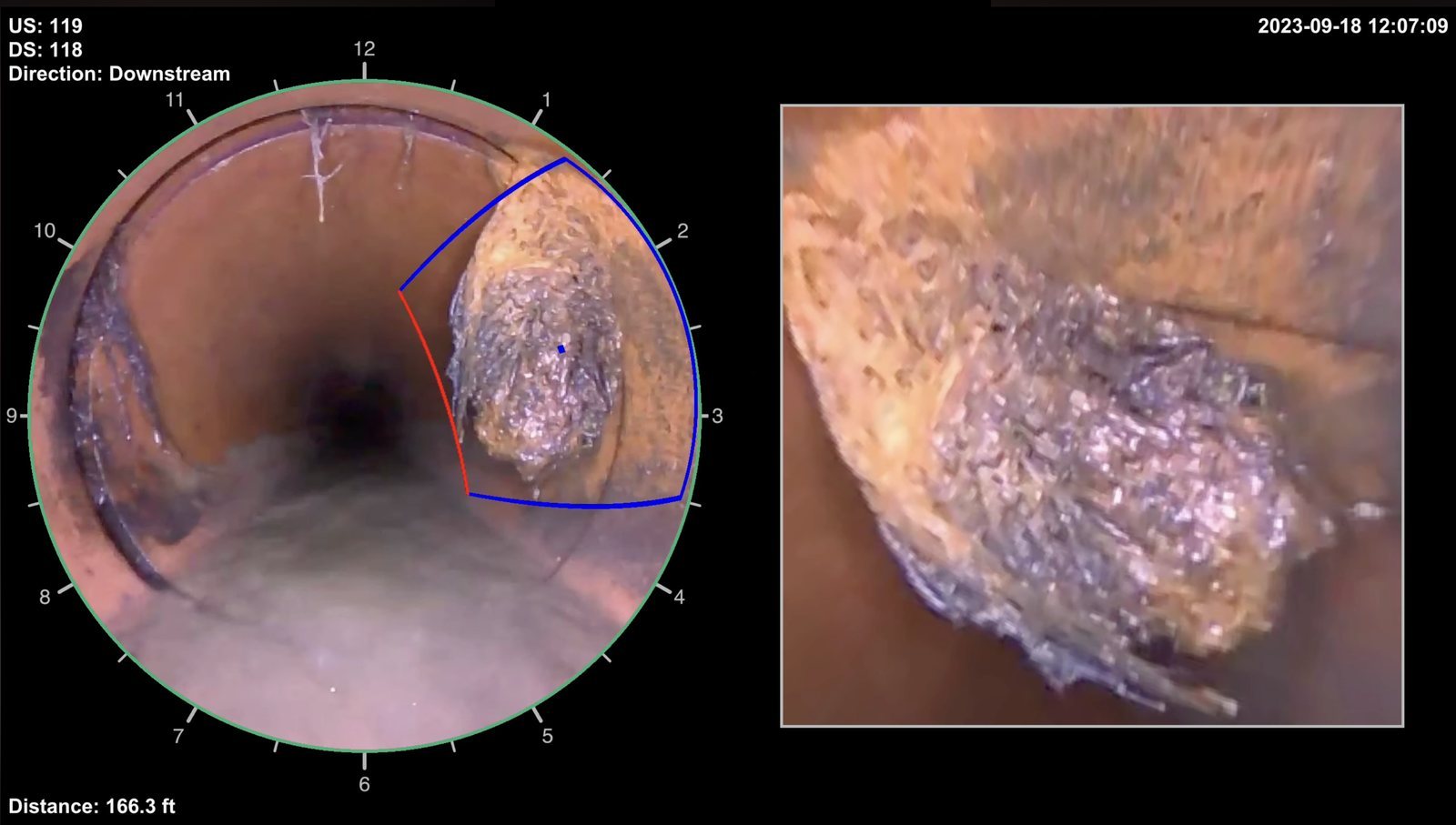
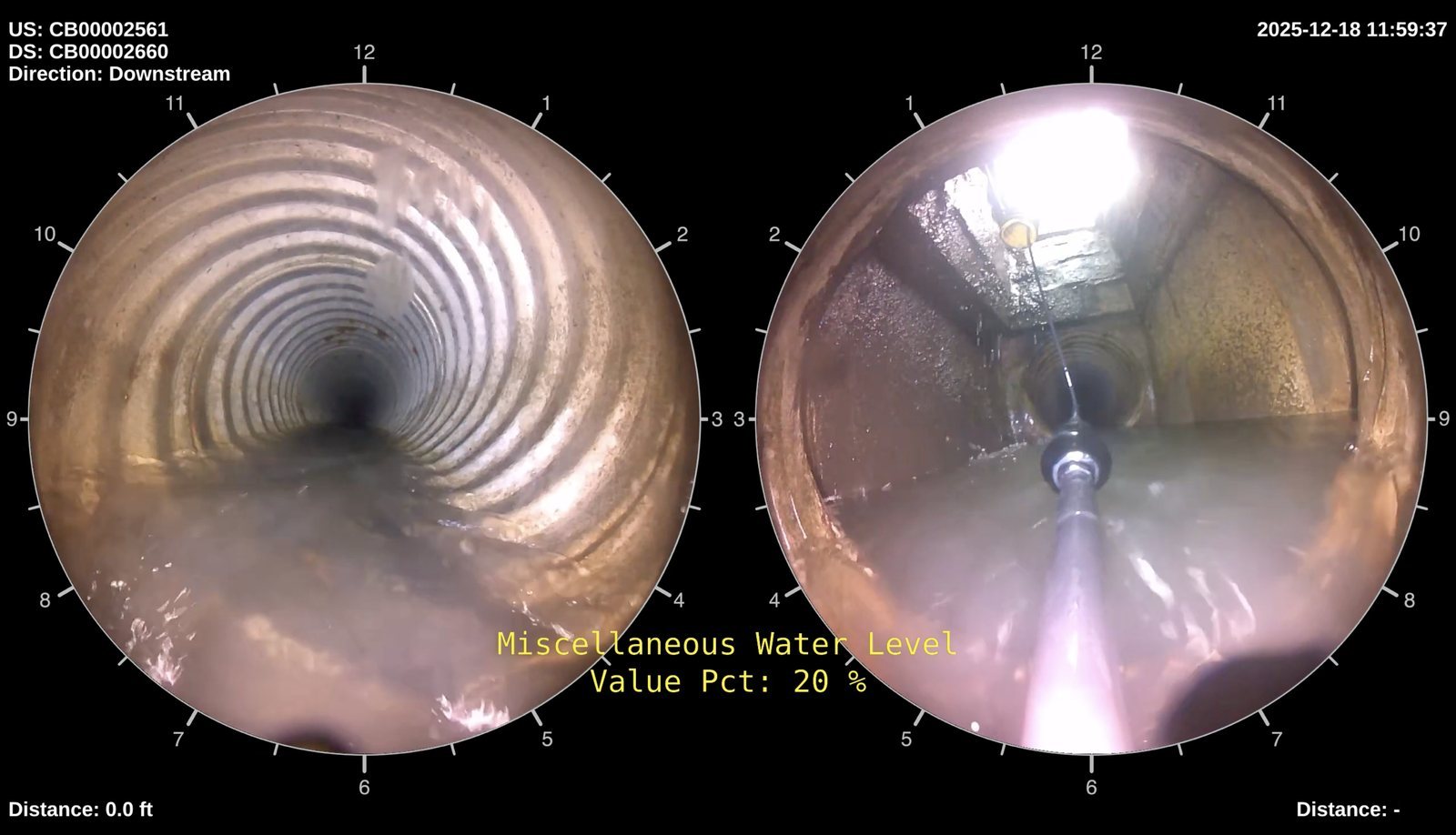
Screen captures from our own inspection runs. Asset identifiers are the client’s own node numbering; no site or owner detail is shown.
Every observation is coded by a person who holds the certification.
AI narrows the pass and flags what deserves a second look. A NASSCO-certified operator reviews the footage against the standard and signs the record — because the code in your asset management system has to stand up in a capital planning meeting, not just look plausible.
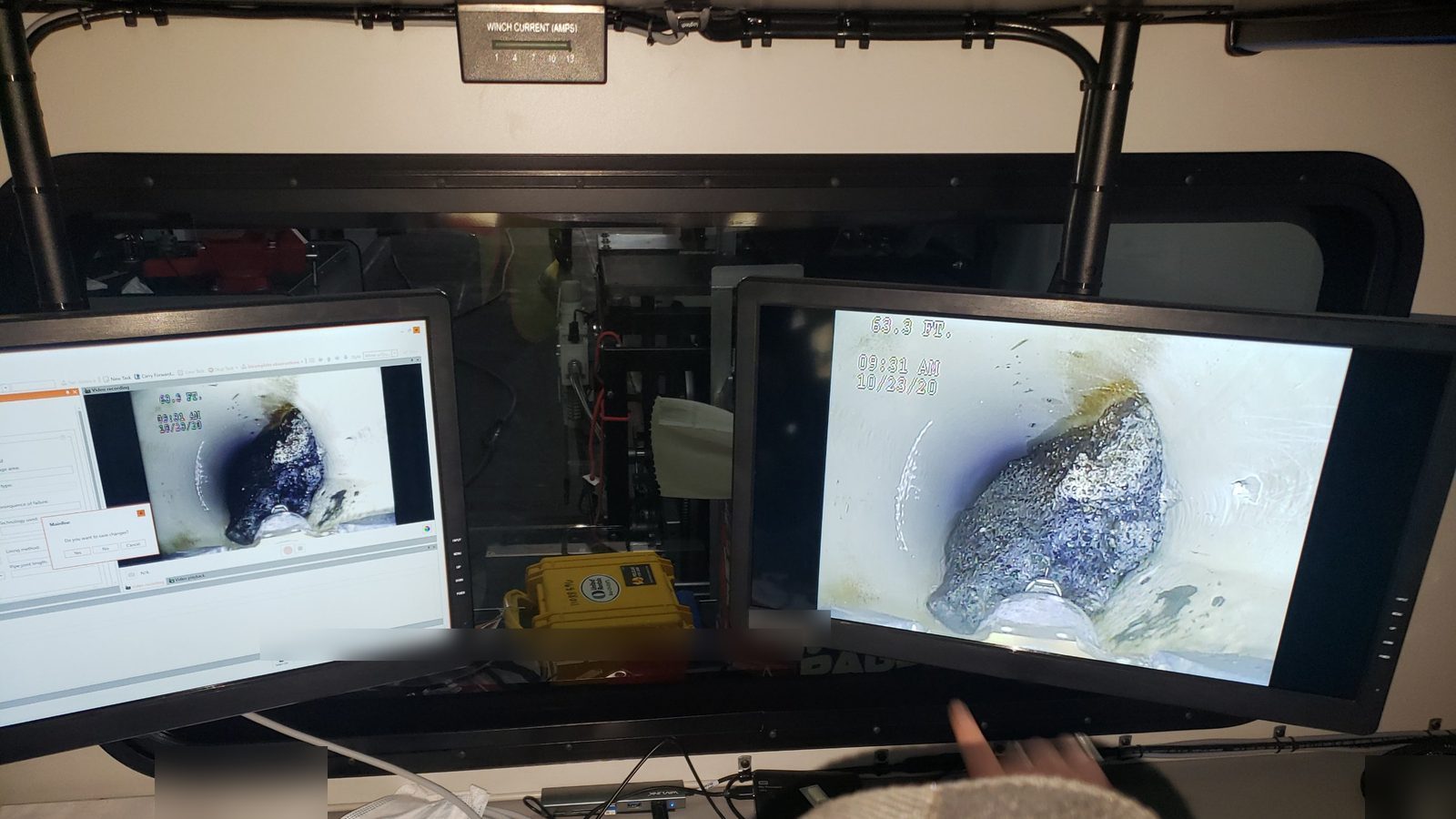
Project photography from work performed by our crews and by our leadership’s prior companies. Client-identifying detail removed.
Coded data, not a drive full of video.
Certified coding across all four NASSCO programs, with AI doing the searching and a certified coder doing the judging.